What is Private Label Manufacturing?
At its core, private label manufacturing is about turning your business idea into a real product without owning production facilities. Think of it like hiring a chef to cook your signature dish—you bring the recipe and branding, they handle the kitchen.
Modern private label brand manufacturers are no longer just factories. In 2026, they act as innovation partners, offering formulation, packaging, compliance and even market insights. Businesses rely on them to reduce time-to-market and compete globally without massive upfront investment.
Whether you’re launching skincare, apparel, supplements, or tech accessories, private label services allow you to test, scale, and pivot quickly. At Dexar Industry, we help businesses develop high-quality private label products that support long-term growth and brand success.
Why Businesses Choose Private Label Companies
So why are brands shifting towards private label companies instead of traditional manufacturing?
The answer is simple: control, cost-efficiency and scalability.
Private label lets you:
- Build your own brand identity
- Control pricing and margins
- Launch faster than competitors
- Test multiple products with lower risk
And here’s the twist—private label is no longer just a “cheap alternative.” According to recent trends, many consumers now prefer private labels over big brands, driven by trust, quality and transparency .
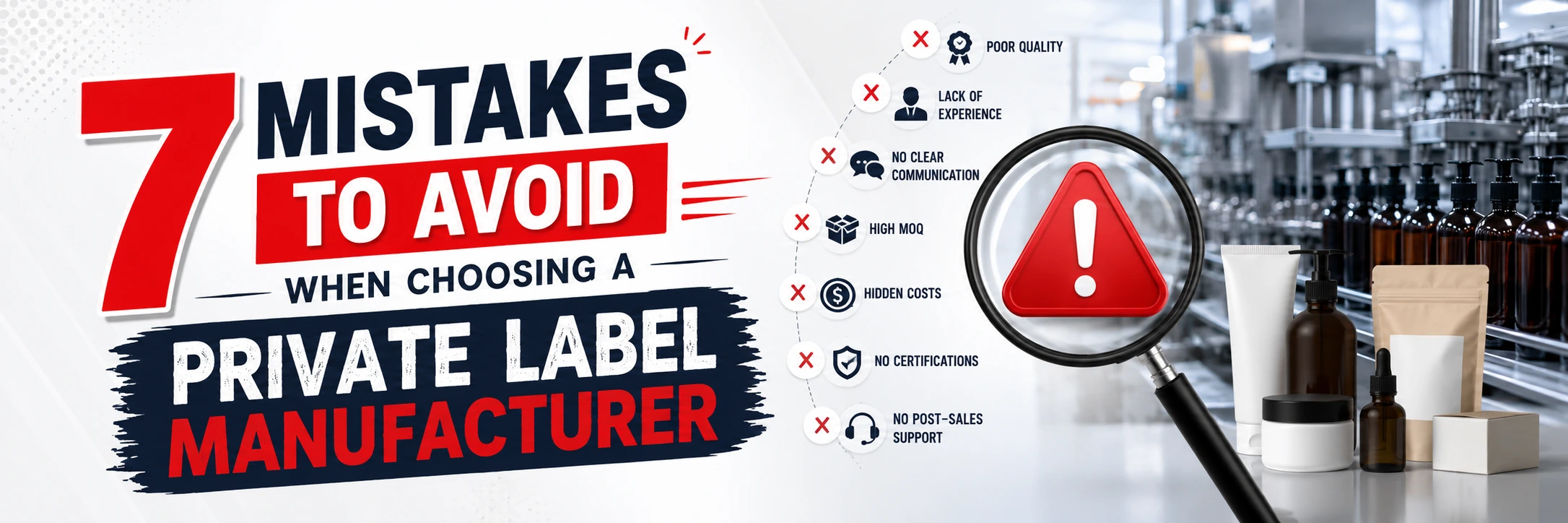
Mistake #1 – Choosing Based on Price Alone
Hidden Costs You Didn’t Expect
Let’s be honest—price is the first thing most people look at when choosing private label suppliers. And that’s where the trouble begins.
Going with the cheapest manufacturer might feel like a win initially, but it often leads to:
- Poor product quality
- Delays in production
- Hidden fees (packaging, shipping, revisions)
- Increased return rates
Imagine building a brand on shaky foundations. It might stand for a while, but eventually, cracks will show.
Many experienced entrepreneurs say that focusing only on price is like “buying a cheap parachute”—you won’t notice the problem until it’s too late.
Instead, think long-term. A slightly higher cost with reliable private label manufacturers often results in better margins, stronger branding and fewer headaches.
Mistake #2 – Ignoring Product Quality Standards
Importance of Certifications and Testing
Here’s a hard truth: your manufacturer defines your product quality.
If your private label manufacturing partner cuts corners, your brand reputation takes the hit—not theirs.
Quality isn’t just about appearance. It includes:
- Material durability
- Safety compliance
- Ingredient integrity (for cosmetics/food)
- Packaging standards
In 2026, consumers are more informed than ever. They read labels, compare ingredients and demand transparency. That’s why manufacturers offering certified production (FDA, ISO, GMP etc.) are becoming essential.
Skipping quality checks might save money today—but it can destroy your brand tomorrow.
Mistake #3 – Not Checking Manufacturer Experience
Industry-Specific Expertise Matters
Not all private label companies are created equal.
A manufacturer specializing in cosmetics might struggle with supplements. A clothing manufacturer may not understand electronics compliance.
Experience matters because:
- It reduces trial-and-error costs
- Ensures faster production timelines
- Improves product consistency
Think of it like hiring a doctor—you wouldn’t go to a dentist for heart surgery, right?
Always choose a manufacturer with proven expertise in your niche.
Mistake #4 – Overlooking Communication & Support
Why Communication Breaks Businesses
Poor communication is one of the most underestimated risks in private label services.
Imagine this:
You send product specifications. The manufacturer misunderstands them. You receive a bulk order that doesn’t match your expectations.
Now what?
Clear communication ensures:
- Accurate product development
- Faster problem-solving
- Better long-term relationships
Look for manufacturers who:
- Respond quickly
- Provide clear updates
- Offer dedicated support teams
Because in this business, silence is expensive.
Mistake #5 – Ignoring Minimum Order Quantities (MOQ)
Scaling Problems and Inventory Risks
MOQ (Minimum Order Quantity) can make or break your business.
Many private label manufacturers require large orders. While this reduces unit cost, it increases risk.
Here’s the problem:
- You invest heavily upfront
- Product doesn’t sell
- You’re stuck with dead inventory
Modern trends show that brands now prefer low MOQ manufacturers to test products before scaling .
Smart strategy? Start small. Validate demand. Then scale.
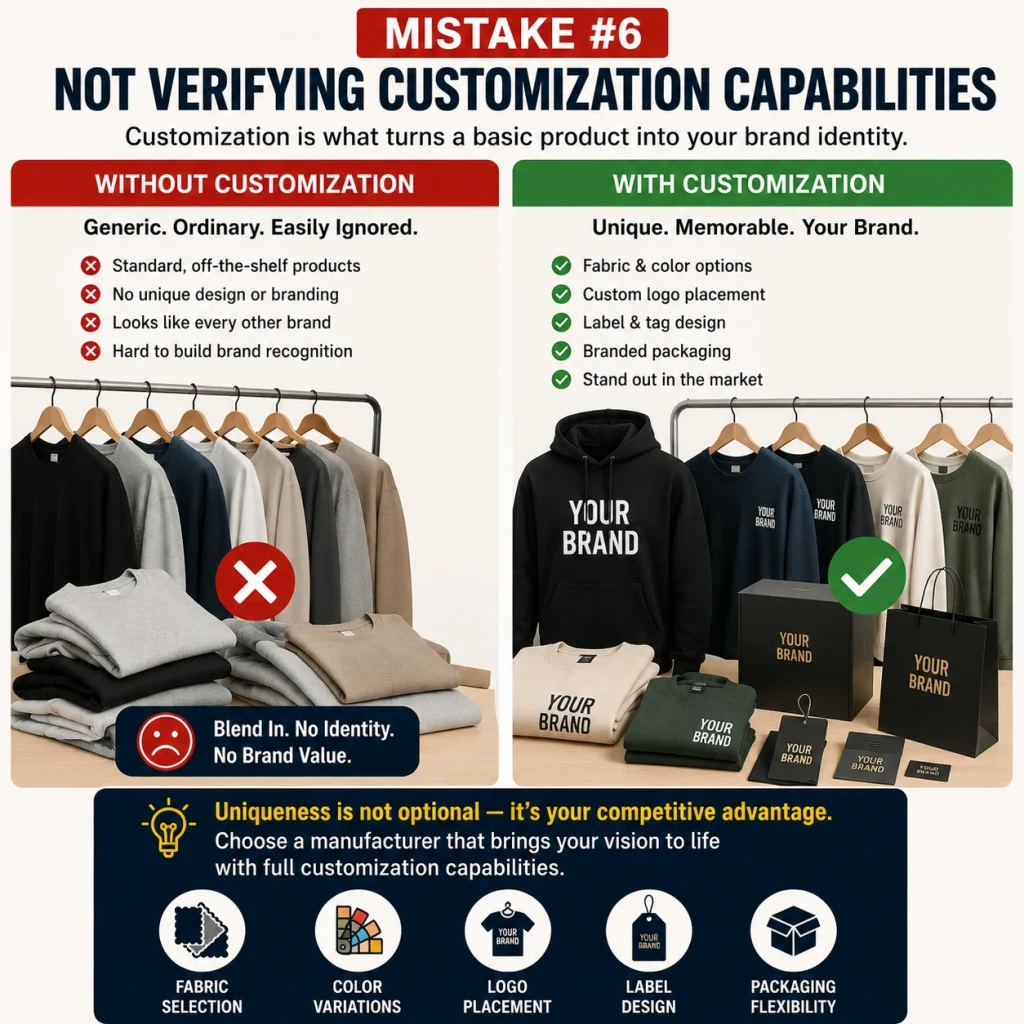
Mistake #6 – Not Verifying Customization Capabilities
In the clothing industry, customization is what transforms a basic product into a strong brand identity. Many businesses make the mistake of working with private label manufacturers that only offer standard, off-the-shelf products. While generic items may seem cost-effective, they fail to stand out in today’s highly competitive fashion market. Consumers are constantly looking for unique styles, personalized designs, and branded packaging that reflects individuality. That’s why top private label clothing manufacturers provide full customization options, including fabric selection, color variations, logo placement, label design, and packaging flexibility. Without these capabilities, your products risk blending into a crowded marketplace with no brand recognition. In fashion, uniqueness is not optional—it is the key to building a memorable and successful brand.
Mistake #7 – Skipping Contracts & Legal Terms
Ownership, Liability & Compliance
This is the mistake that can cost you everything.
Many beginners trust manufacturers without clear contracts. That leads to:
- Loss of formula ownership
- Legal disputes
- Compliance issues
Always define:
- Product ownership rights
- Liability clauses
- Quality standards
- Delivery timelines
A contract isn’t just paperwork—it’s your protection.

Key Factors to Consider When Choosing Private Label Manufacturers
Production Capacity & Scalability
You need a manufacturer who grows with you. Starting small is great—but what happens when demand explodes?
Choose partners who can scale production without compromising quality.
Supply Chain Reliability
Delays can kill momentum. Reliable private label suppliers ensure consistent delivery and stable inventory flow.
Transparency & Pricing Structure
Clear pricing builds trust. Avoid manufacturers who hide costs or change terms unexpectedly.
Comparison: Private Label vs White Label
| Feature | Private Label Manufacturing | White Label |
| Customization | High | Low |
| Branding | Unique | Shared |
| Product Control | Full | Limited |
| Cost | Moderate | Lower |
| Differentiation | Strong | Weak |
How to Find the Top Private Label Manufacturers in the World
Finding the top private label manufacturers in the world isn’t about Google searches alone. It also involves choosing the right product niche, such as activewear categories like crop tops, leggings, sports bras and yoga sets, where demand is growing rapidly.
Final Thoughts
Choosing the right private label manufacturer is like choosing a business partner. The right one helps you grow. The wrong one holds you back.
In today’s competitive landscape, success doesn’t come from just having a product—it comes from having the right manufacturing foundation behind it.
Avoid these seven mistakes and you’ll already be ahead of many new brands entering the market. If you’re looking for a trusted private label manufacturing partner or need guidance for your next product launch, feel free to contact us to discuss your requirements.
FAQs
What is the difference between private label and contract manufacturing?
Private label manufacturing allows businesses to sell products under their own brand using existing formulations or designs from the manufacturer. Contract manufacturing involves creating custom products based on your specific requirements. Private label is generally faster and more cost-effective, while contract manufacturing offers greater customization.
Are private label manufacturers profitable for startups?
Yes, private label manufacturers help startups reduce production costs and avoid investing in expensive facilities. This allows businesses to launch products faster and focus on branding and marketing. Many successful startups use private label manufacturing to enter the market with lower risk.
How do I verify a private label supplier?
Start by checking certifications, industry experience and customer reviews. Request product samples to evaluate quality and consistency before placing a large order. If possible, conduct a factory audit or virtual inspection to verify their manufacturing capabilities.
What industries use private label manufacturing the most?
Private label manufacturing is commonly used in cosmetics, supplements, food and beverages, apparel and electronics. Businesses in these industries use private label services to create branded products without owning production facilities. This model helps companies scale quickly while maintaining brand control.
Can I scale my business with private label manufacturing?
Yes, private label manufacturing is designed to support business growth and expansion. Many private label companies offer scalable production options that increase as demand rises. This allows brands to add new products and reach larger markets without major operational investments.