Finding the right manufacturing partner can determine the success or failure of your apparel business. Whether you are launching a fitness label, expanding a teamwear collection, or scaling an established company, choosing a reliable custom sportswear manufacturer requires more than comparing prices.
Many brands focus only on production costs and overlook critical factors that directly impact product quality, customer satisfaction, and long term growth.
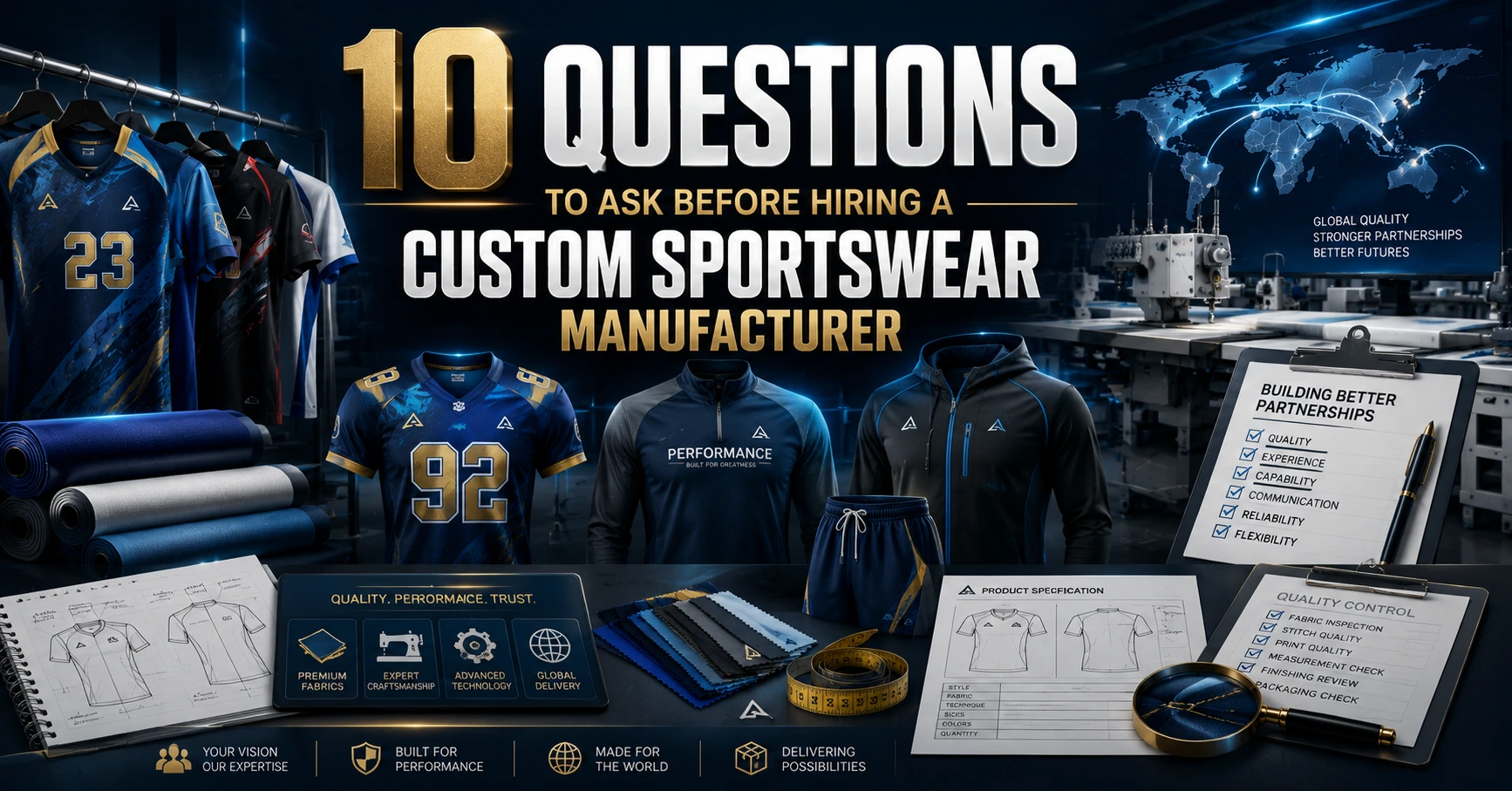
Before signing with any supplier, these are the ten most important questions every apparel brand should ask.
1. What Experience Do You Have in Sportswear Manufacturing?
Sportswear production is very different from standard fashion manufacturing.
Performance apparel requires expertise in:
- Moisture management fabrics
- Compression materials
- Athletic fit development
- Stretch fabric construction
- Technical stitching methods
An experienced sportswear manufacturer understands how sports garments perform during training and competition.
When evaluating potential partners, ask about their experience producing products similar to yours.
Brands searching for a reliable manufacturing partner often benefit from working with an established custom sportswear manufacturer that already understands the demands of athletic apparel production.
2. What Types of Sportswear Do You Manufacture?
Not every factory specializes in every product category.
Some manufacturers focus on:
- Team uniforms
- Gym wear
- Running apparel
- Compression wear
- Training clothing
- Corporate sportswear
Choosing a factory with experience in your product category reduces production errors and improves final product quality.
3. What Is Your Minimum Order Quantity?
Minimum order quantity plays a major role in planning inventory and managing cash flow.
Startup brands often require lower production volumes, while established companies may need larger manufacturing capacity.
Ask questions such as:
- What is the minimum order quantity per style?
- Can sizes be mixed?
- Are color variations allowed?
- Does the minimum quantity change with customization requirements?
Understanding these details early prevents unexpected surprises later in the process.
4. Can You Provide Samples Before Production?
Sampling allows brands to evaluate:
- Fabric quality
- Stitching standards
- Fit accuracy
- Printing quality
- Overall workmanship
Never move directly into bulk production without approving a sample first.
A professional manufacturer should always provide sample development services before starting full scale manufacturing.
5. What Customization Options Are Available?
Modern apparel brands require more than simple logo placement.
Ask manufacturers about available customization services including:
- Sublimation printing
- Screen printing
- Embroidery
- Custom labels
- Woven tags
- Packaging solutions
- Private branding options
The ability to customize products helps brands create a stronger identity in competitive markets.
6. What Fabrics Do You Recommend for My Products?
Fabric selection directly influences comfort, durability, and performance.
An experienced supplier should explain the advantages of different materials including:
- Polyester
- Spandex blends
- Interlock fabrics
- Mesh panels
- Compression textiles
A good manufacturing partner acts as an advisor rather than simply accepting orders.
7. What Is Your Typical Production Timeline?
Delivery delays can disrupt product launches and seasonal campaigns.
Before placing an order, ask:
- How long does sampling take?
- What is the average production timeline?
- How long does shipping require?
- How are delays communicated?
Reliable communication is one of the strongest indicators of a professional supplier.
8. What Quality Control Processes Do You Follow?
Quality control protects both the manufacturer and the brand.
Strong factories perform inspections during:
- Fabric sourcing
- Cutting
- Stitching
- Printing
- Packing
- Final shipment preparation
Ask suppliers how they maintain consistency across large production runs.
9. Can You Support Brand Growth in the Future?
Many businesses outgrow their first manufacturer because production capacity becomes a limitation.
Consider whether the supplier can support:
- Larger order quantities
- New product categories
- International expansion
- Seasonal demand increases
Choosing a scalable manufacturing partner for sportswear saves time and prevents disruption as your business grows.
10. How Easy Is Communication Throughout the Process?
Communication issues are among the biggest reasons manufacturing partnerships fail.
Evaluate how quickly the supplier responds to:
- Questions
- Design revisions
- Sample feedback
- Production updates
Fast and transparent communication often reflects the professionalism of the entire operation.
Why These Questions Matter
Choosing a manufacturing partner is not simply a purchasing decision. It is the beginning of a long term business relationship.
The right supplier helps brands improve quality, reduce production risks, and grow confidently in competitive markets.
Businesses looking for technical expertise, flexible production options, and international manufacturing standards should focus on experience, communication, and proven production capabilities rather than price alone.
Companies seeking long term partnerships often start by reviewing the manufacturer’s product capabilities and production expertise through their sportswear collections and manufacturing portfolio.
Learning more about the company background and manufacturing philosophy can also provide valuable insight into how they support global apparel brands.
When you are ready to discuss your project requirements, product ideas, or customization needs, speaking directly with the manufacturing team is often the fastest way to determine whether the partnership is the right fit.
Frequently Asked Questions
How do I choose the best custom sportswear manufacturer?
Look for experience, product specialization, communication quality, customization options, and strong quality control systems rather than focusing only on pricing.
What is a good minimum order quantity for startup brands?
The ideal minimum order quantity depends on your budget, product range, and target market. Many startup brands prefer flexible quantities during their launch phase.
Why is sampling important before bulk production?
Samples allow brands to verify fit, fabric quality, colors, and construction before committing to larger orders.
What customization options should a sportswear manufacturer provide?
A professional manufacturer should offer printing methods, embroidery, private labeling, packaging options, and branding solutions.
How long does sportswear production usually take?
Production timelines vary depending on order size, customization requirements, and shipping destination, but most projects include separate stages for sampling, manufacturing, and delivery.
Should I choose the lowest priced manufacturer?
Not always. The lowest price can sometimes lead to quality issues, communication problems, and production delays that cost more in the long term.
What are the signs of a reliable manufacturing partner?
Transparent communication, consistent quality standards, industry experience, and the ability to scale production are strong indicators of a reliable supplier.