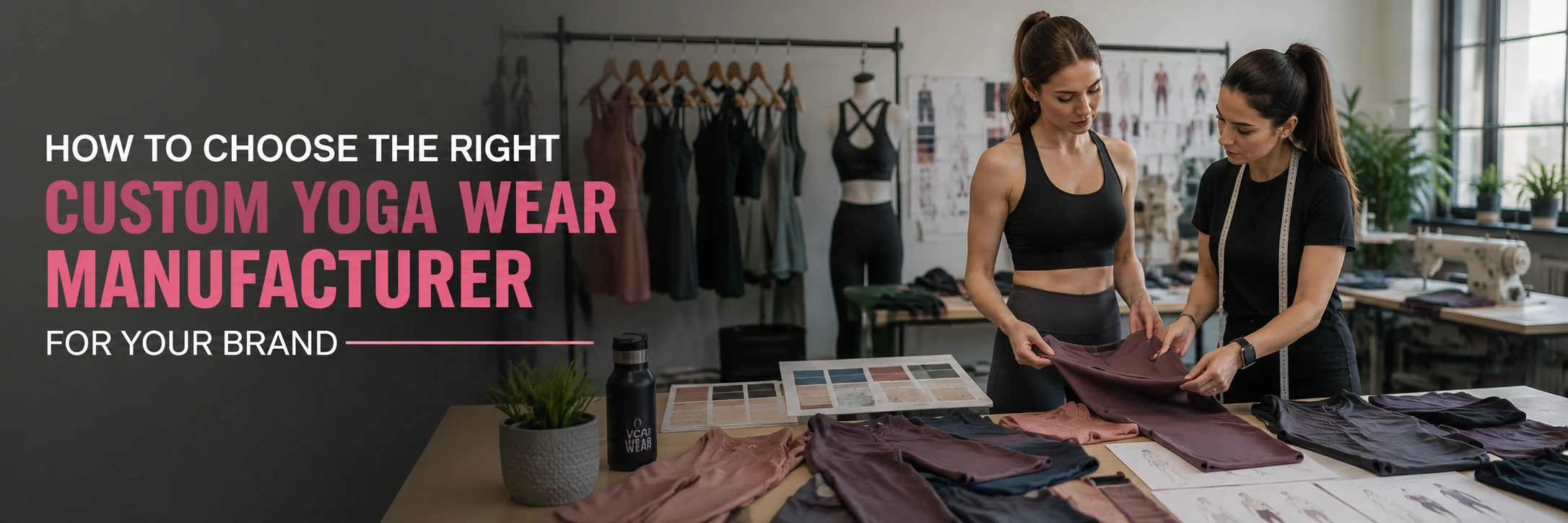
Choosing the right custom yoga wear manufacturer is an important step when launching or expanding an activewear brand. Your production partner affects product quality, fitting, fabric performance, pricing and delivery timelines.
A reliable factory should do more than simply stitch garments. It should understand stretch fabrics, activewear construction, custom sizing, logo application and bulk production requirements.
Before placing an order, brands should carefully compare different factories and evaluate their experience, capabilities and communication. This guide explains the main factors to consider when selecting a production partner for your yoga clothing collection.
At Dexar Industry, we help activewear brands turn their product ideas into professionally developed garments through fabric selection, sampling, customization and bulk production.
Define Your Product Requirements
Before contacting a factory, clearly define the products you want to develop. This helps the production team understand your expectations and provide more accurate information about costs, minimum quantities and timelines.
Your product plan may include high-waisted leggings, supportive sports bras, yoga shorts, tank tops, flared pants, jackets and matching activewear pieces. You can also explore our custom sports bra, legging and crop top production services when planning a complete collection for your brand.
Your product plan may include:
- High-waisted leggings
- Sports bras
- Crop tops
- Tank tops
- Yoga shorts
- Flared pants
- Long-sleeve tops
- Jackets and hoodies
- Matching activewear collections
You should also decide your target customer, preferred price range, required size range and overall brand positioning.
For example, a premium yoga collection may require softer fabric, stronger stitching, advanced finishing and more detailed packaging. A basic fitness collection may focus more on affordability and simple designs.
The clearer your product requirements are, the easier it will be for a custom yoga wear manufacturer to understand your project.
Choose a Factory With Activewear Experience
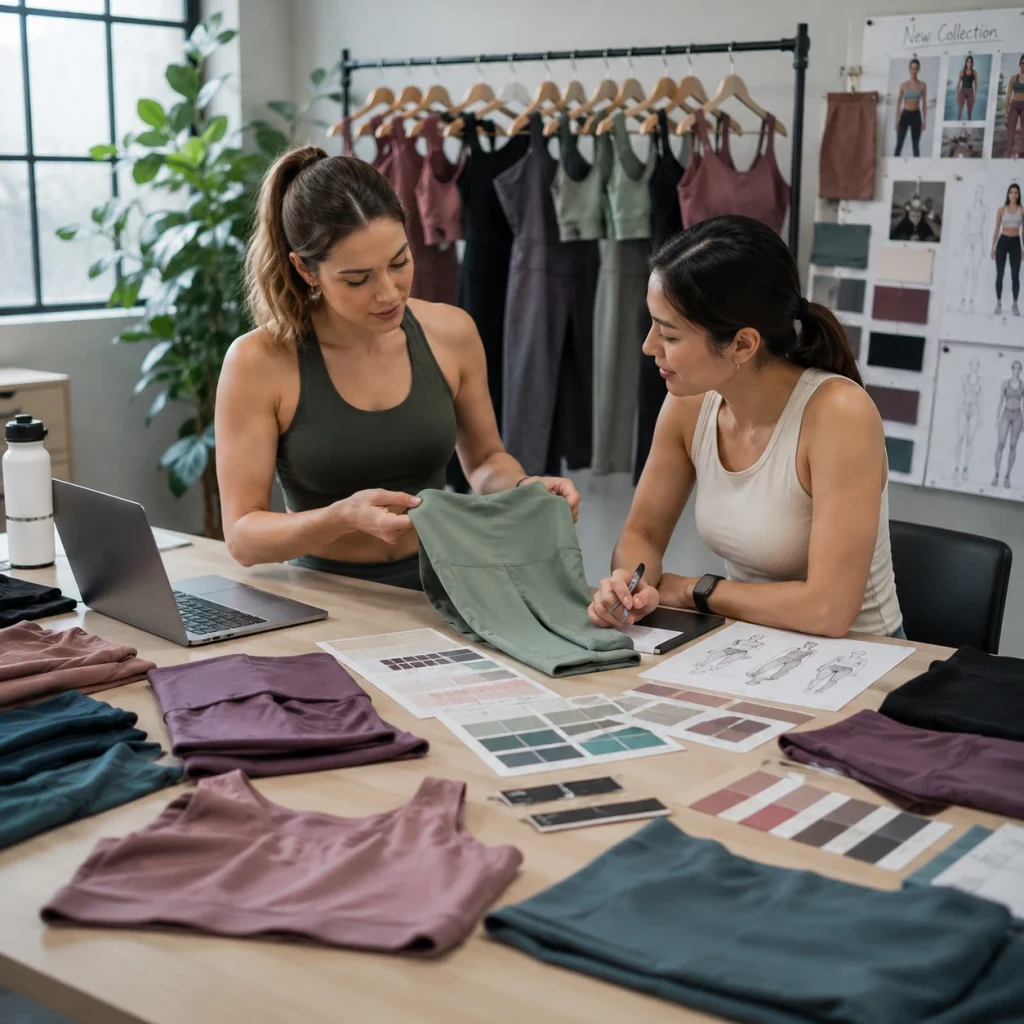
Yoga clothing is different from ordinary casual clothing. It requires knowledge of flexible fabrics, fitted patterns, reinforced seams and movement-focused construction.
A factory with activewear experience should understand:
- Four-way stretch
- Fabric recovery
- Breathability
- Moisture control
- Compression
- Squat-resistant coverage
- Supportive waistbands
- Comfortable seam placement
- Flexible stitching
- Shape retention
Ask the factory to show examples of similar products it has produced. This will help you evaluate its stitching quality, design capability and overall finishing.
A factory that mainly produces basic T-shirts may not have the same technical knowledge as one that regularly handles fitted performance clothing.
Evaluate Fabric Quality
Fabric plays a major role in the comfort, appearance and durability of yoga clothing. It also influences stretch, coverage, breathability and support.
Common materials used in yoga wear manufacturing include polyester-spandex, nylon-spandex, cotton blends, ribbed fabrics and compression materials.
When comparing fabric options, ask about:
- Fabric composition
- GSM or fabric weight
- Stretch direction
- Thickness
- Opacity
- Softness
- Moisture-wicking properties
- Shrinkage
- Pilling resistance
- Colorfastness
- Shape recovery
Always request fabric swatches before approving a material. Pictures cannot accurately show fabric softness, thickness or stretch.
You should also test whether the fabric is suitable for the intended product. A lightweight material may work well for tops but may not provide enough coverage for leggings.
Check the Customization Options
Your products should reflect your brand identity and target market. Before selecting a factory, ask which parts of the garment can be customized.
Customization may include:
- Fabric color
- Printed patterns
- Waistband height
- Pocket placement
- Panel construction
- Strap design
- Removable padding
- Sleeve length
- Garment measurements
- Size grading
- Logo placement
- Labels
- Hangtags
- Packaging
Logo application methods may include heat transfer, screen printing, sublimation, embroidery, silicone printing or rubber patches.
The best branding method depends on the fabric and garment design. Heavy embroidery may not be suitable for highly flexible material, while heat transfer may provide a lighter and smoother finish.
A professional custom yoga wear manufacturer should explain which branding method is most suitable for your product.
Understand the Sampling Process
Never begin bulk production without approving a sample.
Sampling gives you the opportunity to check the design, fabric, measurements, fit, stitching, colors and branding before the full order is produced.
A typical sampling process may include:
- Sharing your design or reference image
- Selecting the fabric and colors
- Preparing the pattern
- Producing the first sample
- Checking the fitting and measurements
- Requesting changes
- Approving the final sample
Wear-test the sample whenever possible. Check how it performs during bending, stretching, sitting and exercise.
For leggings, inspect the waistband, seam strength and fabric coverage. For sports bras, check support, strap placement and comfort.
Provide all corrections in writing. Annotated images, updated measurements and clear notes help reduce misunderstandings.
Compare Minimum Order Quantities
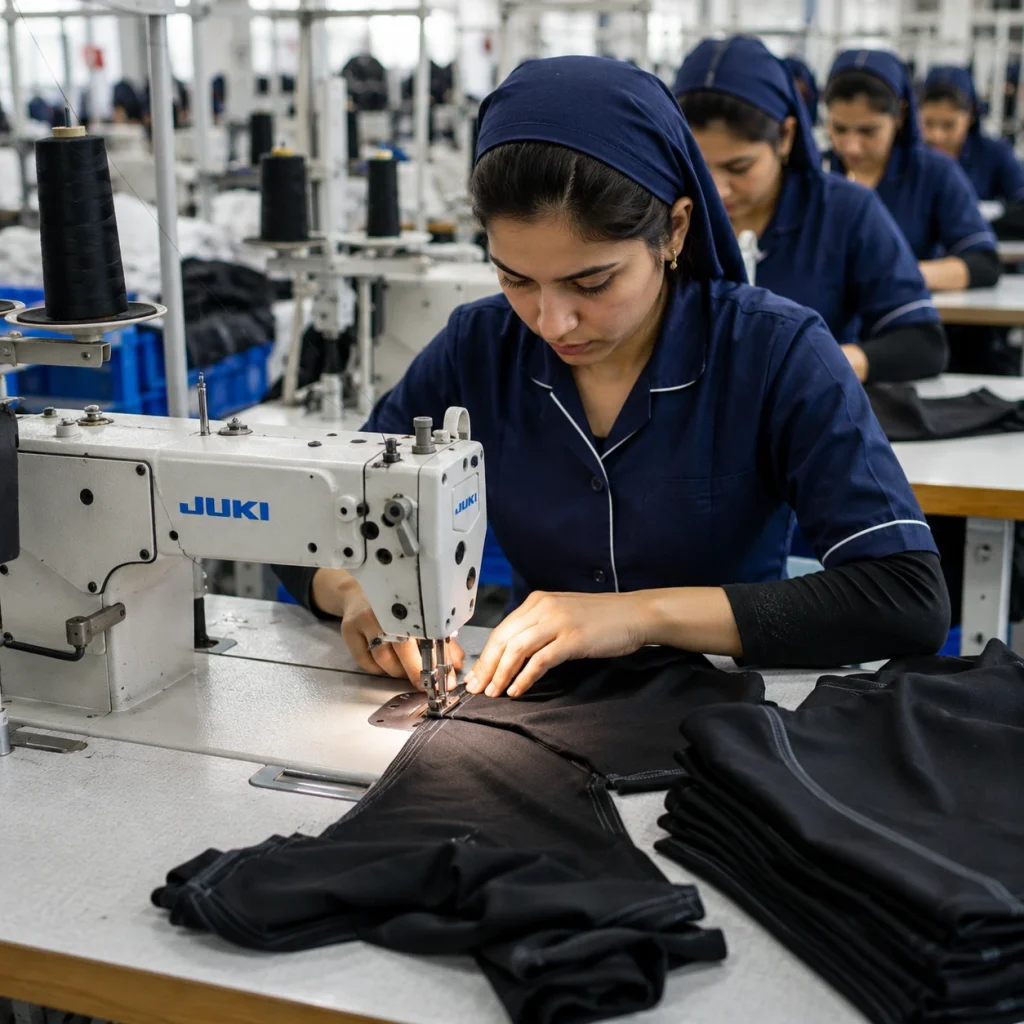
Minimum order quantity is the smallest quantity a factory is willing to produce.
Some factories calculate minimum quantity per design, while others calculate it per color or size. This can significantly affect your total order.
Before placing an order, ask about:
- Minimum quantity per style
- Minimum quantity per color
- Minimum quantity per fabric
- Available size breakdown
- Minimum quantity for custom colors
- Minimum quantity for packaging
- Reorder requirements
A smaller minimum quantity may be useful for startup brands testing the market. However, smaller orders often have higher unit prices.
Large orders may reduce the unit cost, but they also require a bigger investment and create more inventory risk. Choose a quantity based on your sales plan rather than price alone.
Request a Detailed Quotation
A low unit price does not always mean better value.
Ask the factory to provide a detailed quotation that explains what is included. The quotation may cover:
- Fabric
- Pattern development
- Sample cost
- Cutting and stitching
- Logo application
- Labels and hangtags
- Packaging
- Size grading
- Quality inspection
- Shipping
You should also ask whether the price may change after the sample is approved.
Compare the complete service, not only the production cost. A slightly higher price may be worthwhile if the factory provides better fabric, stronger stitching, clearer communication and more consistent quality.
Review Quality-Control Procedures
Quality control should take place throughout the production process.
Ask the factory how it checks fabric, cutting, stitching, measurements, printing and packaging.
Important inspection points may include:
- Correct fabric composition
- Accurate color
- Consistent sizing
- Strong seams
- Correct logo placement
- Fabric defects
- Shade differences
- Waistband shape
- Label accuracy
- Clean finishing
- Proper packaging
You may also request a final inspection before shipment. This can help identify problems before the order leaves the factory.
A dependable custom yoga wear manufacturer should be willing to explain how defective pieces are identified and handled.
Check Production Capacity
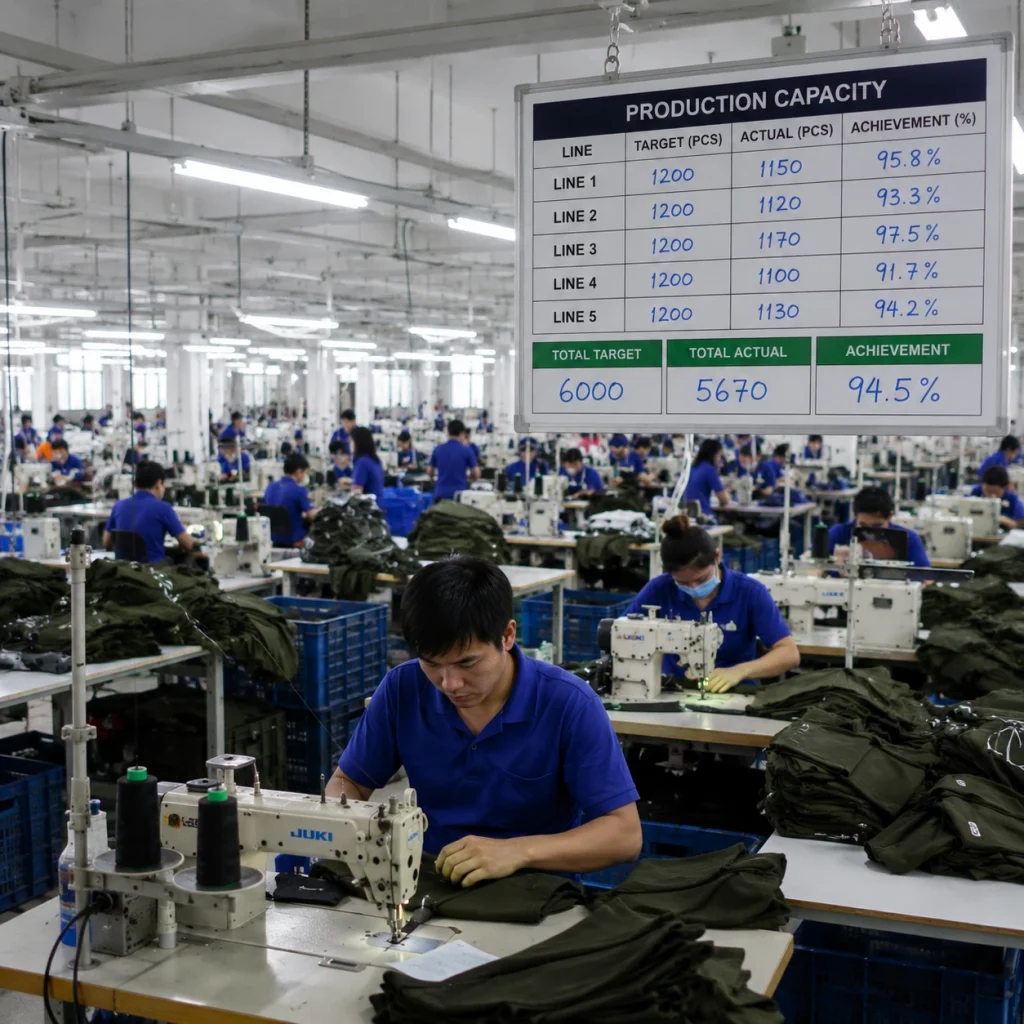
Before placing a bulk order, confirm whether the factory can handle your required quantity.
Ask about:
- Monthly production capacity
- Number of production lines
- Available machinery
- Current workload
- Sample lead time
- Bulk production time
- Packaging time
- Reorder capacity
Production capacity is especially important if you plan to increase your order quantity in the future.
A factory may be suitable for your first small collection but may struggle to support larger repeat orders. Choose a partner that can grow with your brand.
Confirm Production Timelines
Production time depends on fabric availability, design complexity, order quantity and factory workload.
Ask for separate time estimates for:
- Fabric sourcing
- Pattern development
- Sample production
- Sample revisions
- Bulk cutting
- Stitching
- Branding
- Quality checking
- Packaging
- Shipping
Do not build your launch plan around the shortest possible timeline. Allow extra time for sample changes, fabric delays or shipping issues.
Clear timelines are an important part of successful yoga wear manufacturing.
Evaluate Communication
Good communication can prevent costly mistakes.
Pay attention to how the factory responds during the first conversation. A professional team should ask questions about your design, quantity, materials, sizes and branding requirements.
Good communication includes:
- Clear answers
- Written confirmation
- Accurate quotations
- Regular production updates
- Sample pictures and videos
- Quick clarification of problems
- Transparent timelines
Avoid factories that provide unclear information or change important details without explanation.
Your production partner should make it easy to understand what is happening at every stage.
Check Packaging and Labeling Services
Packaging affects how customers experience your brand.
Ask whether the factory can provide:
- Size labels
- Care labels
- Woven labels
- Printed labels
- Hangtags
- Barcode stickers
- Polybags
- Custom boxes
- Thank-you cards
- Product inserts
Make sure all packaging details are confirmed before bulk production begins.
Incorrect size labels, missing tags or poor packaging can create problems even when the garment itself is well made.
Ask About Testing
Performance clothing should be tested for durability and comfort.
Depending on your product and target market, testing may include:
- Stretch testing
- Seam strength testing
- Shrinkage testing
- Colorfastness testing
- Pilling testing
- Fabric recovery testing
- Wash testing
- Opacity testing
Ask whether the factory performs in-house testing or works with an external testing laboratory.
Testing is especially important when you are developing a premium collection or selling in markets with strict product requirements.
Watch for Warning Signs
Be careful when a factory:
- Provides extremely low prices without details
- Refuses to make a sample
- Cannot explain fabric composition
- Avoids discussing quality control
- Promises unrealistic delivery times
- Changes prices frequently
- Gives inconsistent answers
- Cannot show relevant products
- Pressures you to place a large order
- Does not confirm details in writing
One small concern may not be serious, but several warning signs can indicate future problems.
Important Questions to Ask
Before selecting a custom yoga wear manufacturer, ask:
- How much experience do you have with activewear?
- Which products can you produce?
- What fabrics do you offer?
- Can you source custom colors?
- What is your minimum order quantity?
- How much does sampling cost?
- How many sample revisions are allowed?
- Can you work from a tech pack?
- Which logo methods are available?
- Can you produce custom labels and packaging?
- How do you check product quality?
- What is the estimated production time?
- Can you handle repeat orders?
- What payment terms do you offer?
- How will the order be shipped?
Compare the answers from several factories before making your final decision.
Why Work With Dexar Industry?
Dexar Industry helps activewear brands, retailers and fitness businesses develop custom products for bulk production.
You can share your sketches, reference images, technical pack or physical sample with our production team. We can discuss your preferred fabric, colors, measurements, sizes, stitching, logo placement and packaging requirements before sample development begins.
Brands can develop individual products or complete collections, including leggings, sports bras, tops, shorts, jackets and coordinated activewear pieces.
Our team focuses on clear communication, careful product development and consistent production according to approved specifications.
Final Thoughts
Choosing the right custom yoga wear manufacturer requires more than finding the lowest price.
You should compare activewear experience, fabric quality, sampling, customization, minimum quantities, quality control, production capacity and communication.
Take time to approve the fabric and final sample before placing a bulk order. Clear specifications and written confirmation can reduce mistakes and improve product consistency.
Dexar Industry can support your yoga wear manufacturing project from product development and sampling to customization and bulk production. Share your product idea, estimated quantity, required sizes, preferred fabrics and branding details with our team.
Visit our contact us page to discuss your requirements, request production information or begin developing your custom activewear collection.
FAQs
What does a custom yoga wear manufacturer do?
A custom factory develops activewear according to a brand’s specific designs, fabrics, measurements, colors and branding requirements. They work closely with you to turn your ideas into finished products that match your brand identity. This includes sourcing materials, creating samples and managing the full production process.
Should I order a sample before bulk production?
Yes. A sample allows you to check the fabric, fit, measurements, stitching and logo placement before approving the complete order. It helps you identify any issues early and make necessary adjustments. This step reduces the risk of costly mistakes during mass production.
What information should I send to a factory?
Send your design, reference images, technical pack, quantity, colors, sizes, fabric preferences, logo and packaging requirements. The more detailed your information, the easier it is for the factory to understand your expectations. Clear communication helps ensure accurate pricing and smoother production.
Can startup brands place small orders?
Some factories accept smaller quantities, but unit prices may be higher. This is because production costs are spread over fewer pieces. It’s important to ask about minimum order quantities and negotiate options that fit your budget.
How long does production take?
Production time depends on product complexity, quantity, fabric availability, sample revisions and factory workload. Typically, it can take several weeks from sampling to final production. Planning ahead and confirming timelines with your manufacturer is essential.
Which fabrics are suitable for yoga clothing?
Common choices include nylon-spandex, polyester-spandex, cotton blends, ribbed fabrics and compression materials. These fabrics offer flexibility, breathability and moisture-wicking properties. Choosing the right fabric depends on your product style and performance needs.
How can I check product quality before shipping?
You can request production updates, inspection photos, measurement reports or a final third-party inspection before shipment. This helps ensure that the products meet your quality standards. Taking these steps reduces the risk of receiving defective or incorrect items.